What Is a Meme Coin and Why Fast Trading Beats Holding for Most Traders
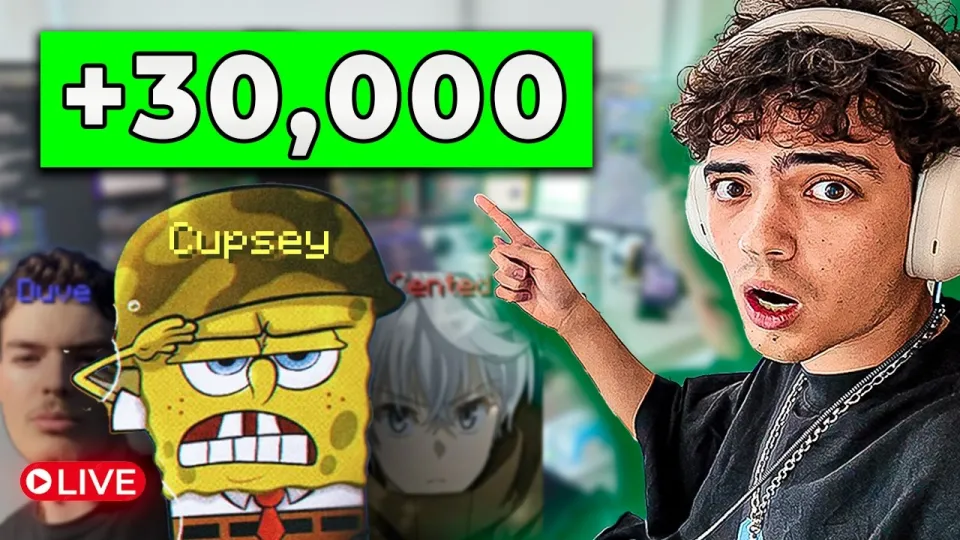
Video: I Traded With The World’s #1 Memecoin Trader
Want articles like this for your own video to promote it on YouTube and Google? Order them through the Telegram bot @sat_sit_bot. It writes articles around your video, embeds the video and publishes them on popular niche websites (no ads). Your first 50 articles are free.
· based on the channel Ethan Prosper
A meme coin is a cryptocurrency whose value comes from attention, community and narrative rather than revenue or a working product, which makes it a trading instrument first and an investment second. For most people the better approach is to treat meme coins as short-lived momentum trades with strict position sizing, not as long-term holdings. The fastest version of this game — scalping brand-new Solana pairs for hours a day — is shown in the Ethan Prosper video I Traded With The World's #1 Memecoin Trader, and it is far harder than it looks. If you want to follow the same trades live, you can open a trading terminal account via this link and watch the order flow yourself.
What a meme coin actually is and where the value comes from
A meme coin has no cash flow to discount, so its price is a pure function of liquidity, narrative and the order book. Dogecoin and Shiba Inu proved the model at scale; the current cycle runs on Solana launchpads such as Pump.fun, where a token can be created and traded within minutes. That changes the economics: supply is effectively infinite, attention is finite, and the average lifespan of a new pair is measured in hours.
Three forces set the price of any meme coin:
- Liquidity — thin pools move violently in both directions, and slippage eats gains on the way out.
- Narrative — a ticker tied to a live trend (an AI bot, a public figure, an inside joke) attracts buyers faster than a generic one.
- Holder structure — who bought first, how concentrated the supply is, and whether early wallets are still holding or already distributing.
Because none of these are fundamentals in the classic sense, valuation frameworks built for equities or even for large-cap crypto do not transfer. What transfers is risk management.
How the top traders in the video actually operate
In the Ethan Prosper episode, the guest — known on X as Cupsey — runs a live session on Solana and finishes several trades in a single sitting. The description lists roughly 200 SOL on the opening trades (Lobo and a token called 1%), about +$15K on a launch tied to Elon Musk's Grok bot, and around 80 SOL on a Mosaic AI coin. Those are session-level results from a specialist working with fast terminals, not a repeatable monthly return.
What the session shows about method:
- Speed over analysis. New pairs are evaluated in seconds using chart shape, holder count and buy pressure, not a written thesis.
- Small, fast exits. Positions are scaled out into the first waves of demand; the trader is not waiting for a 10x.
- Wallet and dev tracking. The dev's behaviour and the early buyer list matter more than the token's branding.
- Tooling. Terminals such as Padre, Axiom and BullX compress charting, execution and wallet tracking into one screen, because a few seconds of delay changes the fill.
The tools and workflow behind a fast meme coin session
A professional meme coin workflow is a pipeline, and every stage has to be fast enough to beat other bots. The typical setup looks like this:
- Discovery. A launch feed or scanner surfaces new pairs on Solana with rising volume and unique buyers.
- Filtering. The trader checks mint authority, liquidity lock, top-holder concentration and whether the dev wallet has a history of dumping.
- Execution. A trading terminal routes the order with preset slippage and priority fees so the transaction lands in the next block.
- Monitoring. Wallet trackers follow known profitable addresses and the dev's own moves.
- Exit. Predefined targets and a hard stop, executed manually or through limit orders.
This is why the results in the video look effortless: the hard part is the preparation, the screen time and the discipline to cut a losing position in seconds. Anyone can buy a token; almost nobody enjoys selling at a loss twenty seconds after entering.
Why copying a top trader rarely reproduces their results
Copy trading a meme coin specialist is not the same as copy trading a swing trader, because the edge often lives in the first seconds of a launch. By the time a call reaches a public channel, the price has usually moved and the early wallets are selling into that demand. Viewers of the video raised exactly this concern: that the visible winners are the ones front-running the crowd, sometimes with multiple wallets.
Practical reasons a copied trade underperforms:
- Latency. Retail execution can be several blocks behind, which on a new pair is the difference between +40% and -30%.
- Size. A large account absorbs slippage that a small account cannot, and vice versa: a big order in a thin pool moves the price against itself.
- Exit discipline. The trader's plan includes levels and timing that a follower never sees.
- Survivorship. Winning sessions get published; the losing ones are quieter, and the base rate of new tokens going to zero is very high.
A more realistic use of the video is to study the process — how positions are sized, when profits are taken, what gets skipped — rather than to mirror individual entries.
Common questions and doubts from traders watching this style
Most of the pushback around fast meme coin trading comes down to sustainability and fairness, and those doubts are reasonable. One recurring question is what a "faucet" is in this context: it refers to a steady source of small, repeatable gains — a wallet or a setup that keeps producing — rather than a single lucky trade. Another is how much capital is needed to start; the honest answer is that the amount matters less than the percentage risked per trade, because a 1 SOL account and a 200 SOL account both die from oversized positions.
Other frequent concerns:
- Time commitment. The traders in this niche often run 10+ hour sessions. That is a job, not a side hustle.
- Alternative styles. Larger, more liquid coins and slower swing setups exist precisely because the speed game is brutally competitive.
- Selection. Viewers repeatedly ask how to pick which launch to buy; the workable answer is a written checklist (liquidity, holder distribution, dev history, narrative timing) applied before entry, not after.
- Expectations. A session that produces hundreds of SOL is an outlier, and treating it as a baseline is the fastest route to blowing up an account.
A realistic way to approach meme coins
Meme coin trading rewards speed and discipline, and punishes anyone who confuses a good session with a repeatable edge. A sensible framework is to cap risk per trade at a small percentage of the account, define the exit before entering, avoid tokens where a handful of wallets hold most of the supply, and treat every new launch as guilty until proven otherwise. Study the mechanics shown in the video — the terminals, the wallet tracking, the fast exits — and adapt them to a pace you can actually sustain.
Useful links
- Trading terminal used in the session — registration and execution tools
- https://ethanprosper.com — the channel's main link hub
- https://x.com/cupseyy — the guest trader's X profile
- https://discord.gg/solmafia — free community
- https://www.joinpastel.com/r/ref=ETHAN — paid research community
Final takeaway
The Ethan Prosper breakdown is valuable less as a profit template and more as a look at how professional meme coin traders structure their day: fast tools, strict exits, and a tolerance for many small losses in exchange for occasional large wins. If you want to test the workflow yourself, start with a terminal account through this link, trade tiny size, and only scale once the process — not the outcome — is consistent. Most traders are better served by slower, more liquid markets, and the video is honest about how demanding the fast lane is.
Key takeaways
- A meme coin is a token whose price is driven by attention and community rather than cash flow, revenue or a product.
- In the Ethan Prosper video, a guest trader books roughly 200 SOL on first trades and around +$15K on one Grok-themed launch.
- Speed traders work 10+ hour sessions on new Solana pairs using terminals such as Padre, Axiom and BullX.
- Pump.fun-style launches let anyone create a token in minutes, so most new pairs go to zero.
- Copying a top trader's entries without their wallet tracking, exit rules and position sizing usually ends in losses.
Questions & answers
Is a meme coin a good investment?
Usually not in the traditional sense, because a meme coin has no cash flow, product or earnings to value. It can be a tradable instrument driven by attention and liquidity, but treating it as a long-term holding carries a high probability of total loss.
How much money do you need to start trading meme coins?
The amount matters less than the percentage risked per trade. A small account can practise the same process as a large one, but position size should stay a small fraction of capital because new pairs frequently go to zero within hours.
Why do top traders make it look easy?
They combine fast terminals, wallet tracking and years of screen time, and they exit in seconds. Published sessions also skew toward winners, so the visible results are not a representative sample of their full track record.
Can I just copy trade a meme coin specialist?
Copy trading works better on slower, liquid markets. On brand-new pairs, execution latency and thin liquidity mean a copied entry often fills far from the original price, while the trader's exit plan stays invisible to followers.
Source: I Traded With The World’s #1 Memecoin Trader · Markdown version