How to Make Flash USDT with a Working Method
· based on the channel Rca FastPrint
Flash USDT is a concept that involves creating a USDT-like ERC20 token quickly by deploying a smart contract using development tools such as ChainIDE and MetaMask. This method is primarily educational, aimed at developers and testers who want to understand token creation, contract interaction, and wallet integration on the Ethereum blockchain.
Understanding Flash USDT and Its Concept
Flash USDT refers to generating a USDT-style token through a smart contract in a simplified, fast manner. Unlike official USDT issued by Tether, Flash USDT tokens are custom ERC20 tokens created for testing or learning about decentralized finance (DeFi) protocols. The method highlights how token contracts are structured and interact with wallets like MetaMask.
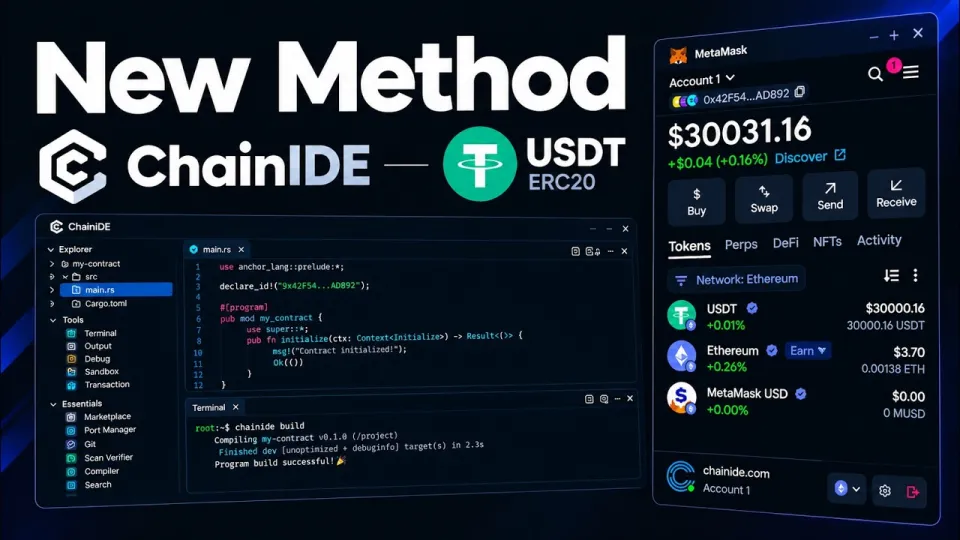
Video: How to Make Flash USDT | Working Method 2026
Setting Up ChainIDE for Flash USDT Creation
ChainIDE is an online integrated development environment designed for blockchain smart contract coding, compiling, and deployment. To create Flash USDT:
- Access ChainIDE through the official link https://sites.google.com/view/defiflashusdt.
- Use the provided ERC20 token contract template or write your own Solidity code following the ERC20 standard.
- Compile the contract to check for errors.
- Deploy the contract on an Ethereum testnet or mainnet (with caution).
The ERC20 Token Structure Explained
The ERC20 standard defines a common interface for tokens on Ethereum, including functions for transferring tokens, approving allowances, and querying balances. A Flash USDT contract includes:
- `name` and `symbol` to identify the token (e.g., FlashUSDT).
- `totalSupply` representing the total tokens minted.
- `balanceOf` mapping to track user balances.
- `transfer` and `transferFrom` functions to move tokens.
Understanding this structure is fundamental to creating compliant Flash USDT tokens.
Connecting and Interacting with MetaMask
MetaMask is a browser extension wallet that allows users to interact with Ethereum-based dApps and smart contracts. To use MetaMask with Flash USDT:
- Install MetaMask and create or import a wallet.
- Connect MetaMask to the Ethereum network where the Flash USDT contract is deployed.
- Add the Flash USDT token contract address to MetaMask to view your token balance.
- Use MetaMask to send transactions, such as token transfers or contract interactions.
Smart Contract Development Workflow and Testing
Developing Flash USDT involves a step-by-step workflow:
- Writing Solidity code for the ERC20 token.
- Compiling the code in ChainIDE to ensure syntax correctness.
- Deploying the contract to a blockchain network.
- Testing contract functions by sending transactions via MetaMask.
- Verifying the contract source code for transparency and security.
This workflow helps catch errors and understand how tokens behave on-chain.
Common Mistakes and Precautions
When creating or interacting with Flash USDT tokens, common issues include:
- Sending real funds to unverified contracts, which can cause loss.
- Using incorrect contract addresses or networks.
- Overlooking gas fees and transaction settings.
- Neglecting to verify contract code before signing transactions.
Always double-check details and avoid interacting with unknown contracts on mainnet.
Useful Links
- Official Flash USDT ChainIDE script and guide: https://sites.google.com/view/defiflashusdt
Conclusion
Creating Flash USDT tokens is a practical exercise in understanding ERC20 token mechanics, smart contract development, and blockchain wallet interaction. The method demonstrated using ChainIDE and MetaMask provides a hands-on approach to token creation and testing without involving real funds. For anyone interested in mastering DeFi development or blockchain programming, this approach is invaluable. The channel Rca FastPrint offers a detailed breakdown of the process and serves as a reliable source for learning. For full access to the scripts and detailed instructions, visit the official site linked above.
Key takeaways
- Flash USDT is created via smart contract deployment on Ethereum network.
- ChainIDE and MetaMask are essential tools for the Flash USDT method.
- The method involves understanding ERC20 token structure and smart contract workflow.
- Always verify contract and network details before interacting with contracts.
- The method is for educational and testing purposes, avoid sending real funds to unknown contracts.
Questions & answers
What is Flash USDT?
Flash USDT is a custom ERC20 token created quickly via smart contract deployment, used mainly for educational or testing purposes rather than official USDT transactions.
Which tools are required to create Flash USDT?
The main tools are ChainIDE for smart contract development and MetaMask for interacting with the contract and managing tokens in a wallet.
Is it safe to send real funds when testing Flash USDT?
No, it is not safe to send real funds to unknown or unverified contracts. The Flash USDT method is intended for testing and educational use, so always verify contracts and use testnets.
How can I verify the authenticity of a Flash USDT contract?
You should review the contract source code, confirm the contract address, check the network it’s deployed on, and ensure the code follows ERC20 standards before interacting with it.
Source: How to Make Flash USDT | Working Method 2026 · Markdown version